



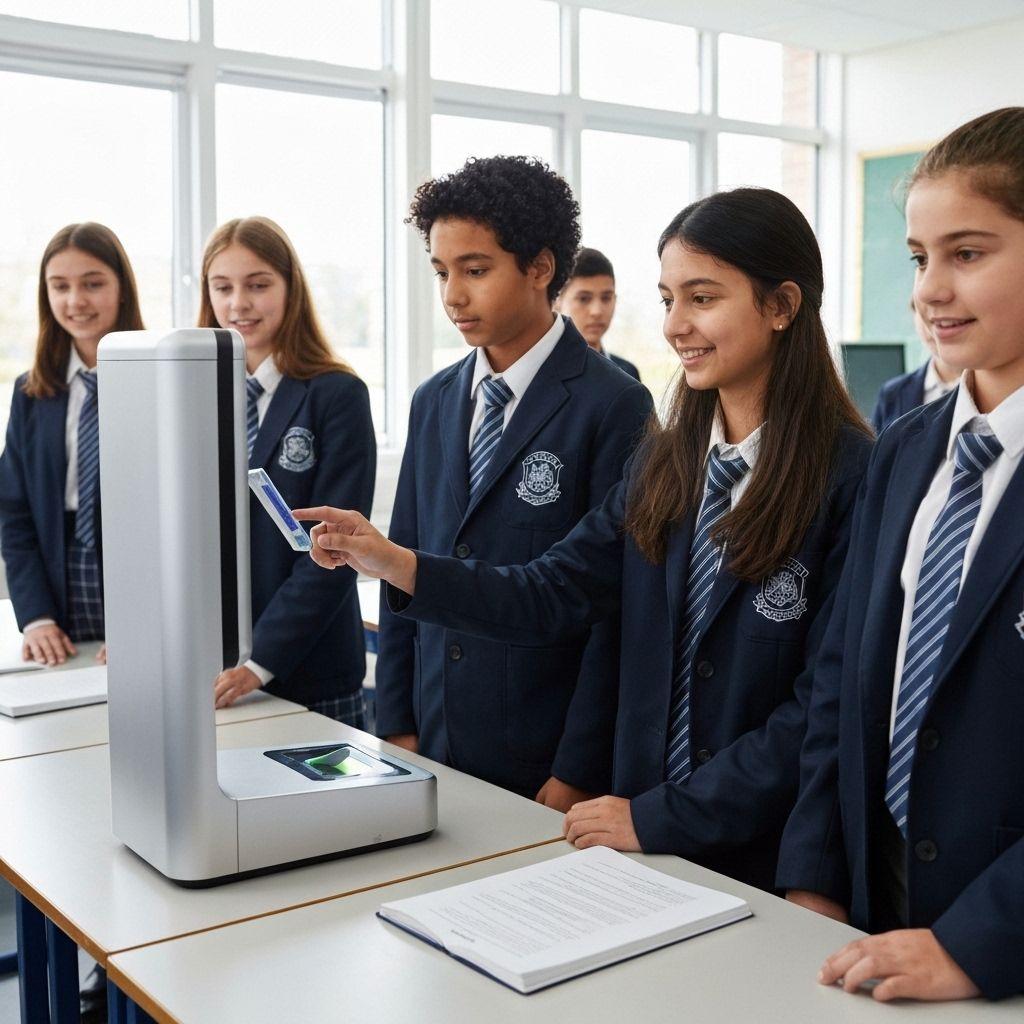
Biometric Attendance System for Schools: Complete Guide for School Owners
Imagine a school where attendance is still managed manually.
Every morning, teachers or office staff spend valuable time marking attendance. At the end of the day, someone has to check which students are absent. At the end of the month, attendance reports need to be prepared manually.
And when a parent asks, "Was my child present at school today?", the school staff may have to search through attendance records or contact the concerned teacher.
Now imagine a different system.
A student marks attendance through a biometric device. The attendance data is recorded digitally and becomes available through a centralized school management dashboard. School administrators can monitor attendance, generate reports, and parents can receive student attendance information through a digital parent app.
This is where a Biometric Attendance System for Schools can make school attendance management more organized, transparent, and efficient.
In this complete guide, we will explain how biometric attendance works in schools, its benefits, how it can be connected with school management software, how parents can stay informed about attendance, and what school owners should consider before choosing a biometric attendance solution.
Quick Answer: What Is a Biometric Attendance System for Schools?
A biometric attendance system for schools is a digital attendance solution that uses biometric technology to record student attendance and connect attendance information with school management software.
Instead of depending entirely on manual registers, schools can use a biometric device to record attendance digitally. The attendance data can then be managed through software, allowing authorized school staff to monitor attendance and generate student-wise, daily, or monthly reports.
When integrated with a complete school management platform, biometric attendance can become part of a larger digital ecosystem that may include student management, parent communication, fees, examinations, results, and other school operations.
Table of Contents
- What Is a Biometric Attendance System for Schools?
- Why Do Schools Need Digital Attendance Management?
- How Does a School Biometric Attendance System Work?
- Biometric Device to School Dashboard: How the Process Works
- Benefits of Biometric Attendance for Schools
- Manual Attendance vs Biometric Attendance
- How Parents Can Stay Updated About Student Attendance
- Daily and Monthly Attendance Reports
- Biometric Attendance with School ERP
- Attendance, Exams, and Student Results in One System
- How to Choose the Right Biometric Attendance Software
- 7 Questions School Owners Should Ask Before Buying
- How Quickly Can a School Start Using the System?
- Frequently Asked Questions
- Why Consider Squdo for Your School?
- Conclusion
- Book a Free Demo
What Is a Biometric Attendance System for Schools?
A biometric attendance system is a technology-based solution designed to digitally record attendance using biometric identification.
Depending on the hardware and implementation, biometric systems may use technologies such as fingerprints or other supported identification methods.
For schools, the main objective is simple:
Make attendance recording more digital, organized, and easier to monitor.
A typical school biometric attendance solution may include:
- Biometric attendance device
- Student attendance records
- Attendance management software
- School administrator dashboard
- Daily attendance monitoring
- Monthly attendance reports
- Student-wise attendance history
- Parent communication or parent app integration
- Integration with a broader School ERP or School Management System
The exact features available depend on the software and hardware used by the school.
The biggest advantage is that attendance data is no longer limited to a physical register. With a connected digital system, authorized users can access attendance information through software and reports.
Why Do Schools Need Digital Attendance Management?
Attendance is one of the most important daily activities in a school.
But many schools still face challenges while managing it.
1. Manual Attendance Takes Time
When attendance is maintained manually, teachers and staff have to spend time recording and organizing student attendance.
For a school with hundreds or thousands of students, this can become a repetitive administrative task.
A digital attendance system can help reduce manual data entry and make attendance management more structured.
2. Attendance Data Can Be Difficult to Monitor
In a traditional system, attendance information may be distributed across different registers, classrooms, or departments.
School administrators may need to collect information from multiple sources to understand the overall attendance situation.
A centralized digital dashboard can make it easier for authorized administrators to view attendance information in one place.
3. Preparing Monthly Reports Can Take Extra Effort
Schools often need attendance reports for:
- Individual students
- Classes
- Sections
- Specific dates
- Monthly attendance
- Overall attendance history
When these reports are prepared manually, staff members may spend significant time compiling information.
Digital attendance software can make report generation more organized and accessible.
4. Parents Want Better Visibility
Parents are increasingly interested in knowing more about their child's school activities.
Attendance is one of the most important pieces of information.
A connected parent app can provide parents with access to relevant student information, depending on the school's configuration and software features.
This can help improve communication between schools and parents.
How Does a School Biometric Attendance System Work?
The exact process depends on the biometric device, network, software, and integration used by the school.
However, a typical workflow looks like this:
Step 1: Student Identification
The student uses the supported biometric device to mark attendance.
Step 2: Attendance Record
The device records the attendance event.
Step 3: Data Synchronization
The attendance information is transferred or synchronized with the connected software system.
Step 4: School Dashboard
Authorized school administrators can view attendance information through the software dashboard.
Step 5: Reports
The system can organize attendance data into useful reports, such as student-wise, daily, or monthly attendance reports, depending on the available features.
Step 6: Parent Communication
If the school uses a connected parent application, relevant attendance information can be made available to parents.
The overall concept can be understood as:
Student → Biometric Device → Attendance Data → School Software → Dashboard → Reports → Parent Communication
This is what makes a connected biometric attendance solution different from a standalone attendance machine.
Biometric Device to School Dashboard: How Does It Work?
One of the most important questions school owners ask is:
"Biometric machine mein attendance mark hone ke baad data software mein kaise dikhega?"
The answer depends on the device and integration method.
A connected system is generally designed so that attendance records captured by the supported device can be synchronized with the school management software.
The school administrator can then use the dashboard to monitor attendance information.
For example:
A student marks attendance in the morning.
↓
The attendance record is captured by the supported device.
↓
The data is synchronized with the connected software.
↓
The authorized school administrator can view the attendance record through the dashboard.
↓
Attendance reports can be generated from the available data.
↓
Relevant information can be made available to parents through the connected parent app, where supported.
This workflow can help schools move from a register-based attendance process toward a more connected digital attendance management system.
Benefits of Biometric Attendance for Schools
A well-implemented biometric attendance system can provide several benefits to schools.
1. Digital Attendance Recording
Instead of depending entirely on physical attendance registers, schools can record attendance digitally.
This can make attendance data easier to organize and manage.
2. Better Attendance Monitoring
School administrators can monitor attendance information through a centralized software dashboard, depending on the system configuration.
This can provide better visibility into student attendance.
3. Reduced Manual Work
Digital attendance can reduce repetitive manual tasks related to attendance recording and report preparation.
This allows school staff to focus more on other administrative responsibilities.
4. Easy Attendance Reports
Schools may need different types of attendance information.
For example:
- Student-wise attendance
- Daily attendance
- Monthly attendance
- Class-wise attendance
- Attendance history
A digital system can make accessing and organizing such information easier.
5. Better Parent Communication
Parents want to stay informed about their children's school attendance.
A school management platform with parent app integration can help schools provide relevant attendance information digitally.
This can improve transparency between the school and parents.
6. Centralized Student Information
When attendance is connected with a broader school management system, attendance information can become part of a centralized student profile.
This can help schools manage student-related information more systematically.
7. Improved Administrative Efficiency
School administrators often manage multiple activities at the same time.
A digital platform can help bring different processes into one environment instead of depending on multiple disconnected tools.
Manual Attendance vs Biometric Attendance
Let's compare the two approaches.
| Feature | Manual Attendance | Biometric Attendance System |
|---|---|---|
| Attendance Recording | Manual | Digital |
| Physical Register | Usually Required | Reduced Dependency |
| Attendance Monitoring | More Manual | Dashboard-Based |
| Report Preparation | Time-Consuming | More Organized |
| Student Attendance History | Manual Records | Digital Records |
| Parent Access | Depends on School Process | Can Be Connected with Parent App |
| School Management Integration | Limited | Possible with Integrated Software |
The right solution depends on the school's requirements, infrastructure, budget, and existing systems.
However, for schools looking to modernize their administrative processes, a connected digital attendance solution can be a practical step toward digital transformation.
How Can Parents Stay Updated About Student Attendance?
One of the biggest advantages of combining attendance software with a parent app is improved communication.
Consider a common situation.
A student is absent from school.
In a traditional system, the parent may only find out later through a phone call, message, or when the child returns home.
With a connected digital school management system, the school can make relevant attendance information available to parents through the parent app, depending on the system's configuration.
Parents may be able to access information such as:
- Daily attendance
- Attendance history
- Monthly attendance
- Other student-related information
- Examination information
- Results
This creates a more connected environment between:
School + Student + Parent
For school management, this can also reduce dependency on manual communication for routine information.
Daily and Monthly Student Attendance Reports
Attendance data becomes more useful when schools can turn it into meaningful reports.
A good attendance management system should make it easier for authorized users to access relevant attendance information.
Daily Attendance Report
Schools can use daily attendance information to understand:
- Which students are present?
- Which students are absent?
- Which classes have attendance issues?
- What is the attendance status for a particular day?
Monthly Attendance Report
Monthly reports can help schools understand longer-term attendance patterns.
For example:
- Student attendance percentage
- Monthly attendance history
- Class attendance trends
- Students with low attendance
This information can help school administrators identify attendance-related issues earlier.
Biometric Attendance with School ERP
A biometric attendance device can record attendance.
But a school needs much more than attendance.
Modern schools may need to manage:
- Student information
- Attendance
- Fees
- Parent communication
- Examinations
- Results
- Reports
- Academic information
- Administrative operations
This is where a School ERP or School Management System can provide additional value.
Instead of using separate systems for every activity, schools can look for an integrated platform where multiple operations can be managed through one ecosystem.
For example:
Biometric Attendance
Student Management
Parent App
Fee Management
Exam Management
Result Management
This approach can help schools create a more connected digital management environment.
Attendance, Exams, and Student Results in One System
Attendance is only one part of a student's school journey.
Schools also need to manage examinations and results.
Imagine having student information distributed across different systems.
Attendance is in one place.
Exam marks are in another.
Results are maintained separately.
Parent communication happens through another platform.
This can create unnecessary complexity.
An integrated school management solution can help bring different student-related processes into one digital ecosystem.
For example, a school may use a platform to manage:
Attendance
Track student attendance digitally.
Parent Communication
Provide parents with access to relevant student information.
Exams
Manage examination-related processes.
Results
Manage and present student result information digitally.
The goal is not simply to install a biometric machine.
The real goal is to create a more connected digital school management system.
How to Choose the Right Biometric Attendance Software for Your School
Choosing a biometric attendance solution is an important decision.
Before selecting a system, school owners should consider more than just the price of the biometric device.
Here are some important factors.
1. Device Compatibility
Check whether the software supports the biometric hardware used by your school.
2. Dashboard
The system should provide an easy-to-understand dashboard for authorized school administrators.
3. Attendance Reports
Check whether the system provides the types of reports your school actually needs.
4. Parent App
If parent communication is important for your school, check whether the software provides a suitable parent app or parent communication feature.
5. School ERP Integration
If you want to manage more than attendance, consider a platform that can support other school management activities.
6. Exam and Result Management
Ask whether the platform can support examination and result-related processes if these are important requirements for your school.
7. Implementation and Support
A good software solution should not only be easy to buy.
The school should also be able to implement and use it effectively.
Ask about:
- Setup process
- Data migration
- Device integration
- Staff training
- Technical support
- Ongoing assistance
7 Questions School Owners Should Ask Before Buying
Before purchasing a biometric attendance solution, ask these questions:
1. Can the biometric device connect with the software?
2. Can school administrators monitor attendance through a dashboard?
3. Can the system generate daily and monthly attendance reports?
4. Can parents access student attendance information through an app?
5. Can attendance be managed along with other school operations?
6. Does the software support examination and result management?
7. How quickly can the system be implemented in our school?
The answers to these questions can help school owners choose a solution based on actual requirements rather than simply choosing a biometric machine.
How Quickly Can a School Start Using a Digital Attendance System?
Implementation time depends on several factors, including:
- Number of students
- Number of biometric devices
- Existing student data
- Hardware compatibility
- Internet/network setup
- School requirements
- Staff onboarding
For schools using a compatible setup, the implementation process can be designed to be quick and organized.
With Squdo, schools can explore a streamlined onboarding process, with setup potentially completed within 1–2 days, depending on the school's requirements, device compatibility, and implementation conditions.
The exact timeline should always be confirmed during the demo and onboarding process.
Frequently Asked Questions
What is a biometric attendance system for schools?
It is a digital attendance solution that uses biometric technology to record student attendance and connect attendance information with school management software.
Is biometric attendance better than manual attendance?
Biometric attendance can reduce manual work and make attendance data easier to organize and monitor. However, the right choice depends on the school's infrastructure and requirements.
Can biometric attendance data be shown on a school dashboard?
Yes, when the biometric device is properly integrated with compatible school management software, attendance data can be made available through an administrative dashboard.
Can parents see student attendance?
If the school uses a parent app connected with the attendance system, relevant student attendance information can be made available to parents according to the school's configuration.
Can schools generate monthly attendance reports?
A digital attendance management system can organize attendance data and provide monthly reports, depending on the software's available reporting features.
Can biometric attendance be integrated with School ERP?
Yes, biometric attendance can be integrated with a compatible School ERP or School Management System.
Can attendance and exam results be managed together?
An integrated School ERP may allow schools to manage attendance alongside examination and result-related processes, depending on the platform's features.
How long does it take to implement biometric attendance in a school?
Implementation time depends on the school's size, hardware, data, network, and requirements. With a compatible setup, Squdo offers a streamlined implementation process that can potentially be completed within 1–2 days.
Why Consider Squdo for Your School?
A biometric attendance device can solve one problem: recording attendance.
But schools often need a broader digital solution.
Squdo is designed to help schools move beyond standalone attendance management toward a more connected school management environment.
With Squdo, schools can explore solutions around:
- Biometric attendance management
- Student attendance tracking
- Attendance reports
- Parent app and communication
- Student information
- Fee management
- Exam management
- Result management
- School administration
This means a school can look at attendance as part of a larger digital ecosystem rather than treating it as an isolated process.
For a school that wants to start with attendance and gradually move toward broader digital management, an integrated platform can be worth considering.
Ready to Digitize Your School Attendance?
Managing attendance should not have to mean spending hours maintaining registers and preparing reports manually.
With the right digital system, schools can move toward a more organized approach where attendance data, reports, parent communication, and other school management processes can work together.
If you are a School Owner, Principal, Director, or Administrator looking for a biometric attendance and school management solution, you can explore how Squdo can fit your school's requirements.
Book a Demo of Squdo
See how your school can manage:
Biometric Attendance + Student Management + Parent App + Exams + Results + More
Get in touch with the Squdo team to discuss your school's requirements and explore the available solution.
[Book Your Free Demo]
Final Thoughts
A biometric attendance system is not just about replacing a paper attendance register with a machine.
The real value comes when attendance data becomes part of a connected digital school management process.
From recording student attendance to viewing reports, communicating with parents, and connecting attendance with other student-related activities, technology can help schools build a more organized administrative environment.
For school owners, the right question is therefore not:
"Which biometric machine should we buy?"
The better question is:
"How can we build a complete digital attendance and school management system that works for our school, staff, students, and parents?"
That is where an integrated solution like Squdo can become part of your school's digital transformation journey.